Stop saying 'I lost my notes again': How creative tools quietly changed my workflow
Have you ever spent ages searching for a half-written idea or a brilliant thought buried in some forgotten file? I used to—until I discovered how simple creative project tools could transform the way I capture, organize, and reuse my knowledge. It wasn’t about fancy tech; it was about finally feeling in control. This is not just productivity—it’s peace of mind. Now, when inspiration strikes at 6 a.m. while I’m making coffee or during a quiet moment folding laundry, I don’t panic. I know exactly where it will go—and more importantly, I know I’ll find it again. That small shift has changed everything.
The Moment Everything Felt Scattered
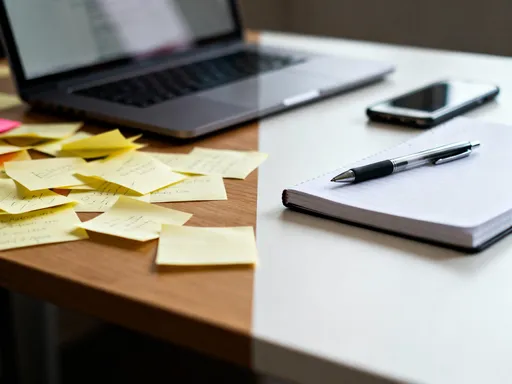
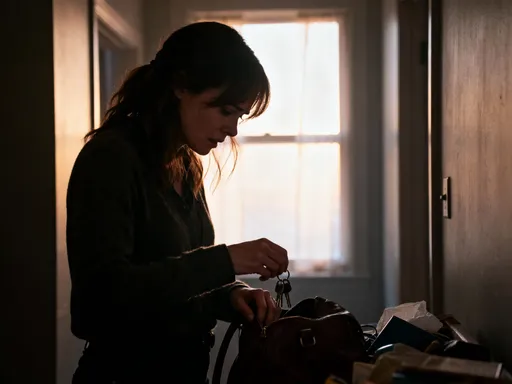
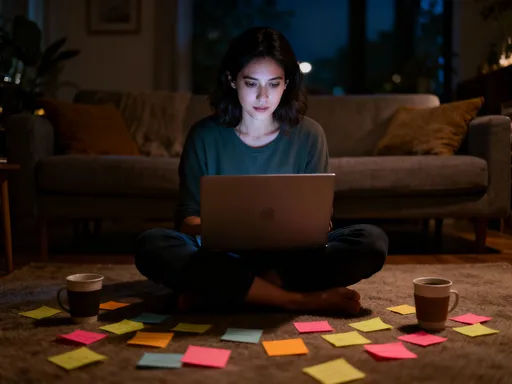
There was a time when my creativity felt like a messy drawer full of tangled jewelry. Ideas sparkled now and then, but trying to pull one out without breaking the rest was nearly impossible. I remember one afternoon—my son had just left for soccer practice, I finally had a quiet hour, and I sat down to finish writing a personal essay I’d been working on for weeks. I knew I’d written a powerful paragraph about resilience last month, maybe in a notebook, or was it in a voice memo? I opened three different apps, dug through my email drafts, and even flipped through sticky notes stuck to old coffee mugs. An hour later, I was exhausted, the paragraph was still missing, and my motivation had completely vanished.
That moment wasn’t just about losing a few sentences. It was about losing trust—in myself, in my process, in my ability to follow through. I started questioning whether I was even cut out for creative work. Was I too disorganized? Too forgetful? The truth was, I wasn’t failing because I lacked ideas. I was failing because I had no system to hold them. Every brilliant insight, every heartfelt reflection, was slipping through the cracks simply because I didn’t have a reliable way to keep them safe. And the emotional toll was real—frustration, self-doubt, and a constant low hum of anxiety that I was always one step behind.
But that day became a turning point. Instead of blaming myself, I asked a different question: what if the problem wasn’t me? What if it was the way I was trying to manage my thoughts? I realized I’d been treating my ideas like paper clips—scattered, temporary, easy to lose. But ideas aren’t paper clips. They’re seeds. And seeds need soil, water, and space to grow. I needed a system that didn’t just store my thoughts but helped them take root. That’s when I began to look for tools that worked with my mind, not against it.
What Really Happens When Ideas Slip Away
When we talk about losing notes or forgotten ideas, we often frame it as a small inconvenience—like misplacing your keys or forgetting to buy milk. But the truth is deeper. Every time a meaningful idea disappears, it chips away at something important: our sense of confidence. I remember being in a meeting with a small group of women from my writing circle, and someone brought up a topic I’d actually written about months before—something about finding joy in everyday rituals. I knew I had something valuable to say, but the words wouldn’t come. I could feel the idea hovering at the edge of my mind, but I couldn’t grab it. I ended up staying quiet, smiling politely, while someone else shared a similar thought. Later, walking home, it all came rushing back—my words, my insights, my voice. But the moment had passed.
That experience stayed with me. It wasn’t just about missing an opportunity to contribute. It was about feeling invisible in a space where I wanted to be seen. And I realized this happens more often than we admit. We don’t just lose ideas—we lose versions of ourselves. The thoughtful observer, the creative problem-solver, the woman who has something wise to say—she gets silenced when her thoughts are scattered across devices, notebooks, and memory.
There’s also the hidden exhaustion of starting over. How many times have I rewritten the same grocery list because I couldn’t find the last one? Or re-outlined a blog post because I couldn’t locate my original notes? It’s not just time lost—it’s energy drained. Each time we repeat work we’ve already done, we send a quiet message to ourselves: your effort doesn’t matter. That’s a dangerous belief, especially for women who already juggle so much. We’re not lazy. We’re overwhelmed. And when our tools don’t support us, we end up carrying the weight of remembering everything, all the time. That’s not how a creative life should feel. It should feel light, curious, and full of possibility—not like a constant battle against forgetfulness.
Finding the Right Tools—Not More Apps
I used to think the solution was more apps. If one didn’t work, I’d download another. I tried color-coded planners, fancy digital journals, and even AI-powered idea organizers that promised to read my mind. But each one added another layer of complexity. I’d spend more time learning how to use the tool than actually using it. I felt like I was auditioning for a tech job instead of writing from the heart. One app required me to tag every note with three labels. Another wanted me to rate my ideas on a scale of one to five. I didn’t want to become a data analyst of my own thoughts. I just wanted to remember what I cared about.
The real shift happened when I stopped looking for the ‘perfect’ app and started asking a different question: what does my mind actually need? I noticed that my best ideas didn’t come when I was sitting at a desk with a to-do list. They came while I was folding laundry, driving to pick up the kids, or sipping tea before sunrise. My thinking was fluid, nonlinear, and deeply personal. So why was I forcing it into rigid, tech-first systems? That’s when I discovered the idea of creative project tools—not as productivity machines, but as quiet companions that adapt to how I think.
I began to look for tools that felt natural, not demanding. Something that let me capture a thought in seconds, whether by typing, speaking, or snapping a photo. Something that didn’t require perfect organization upfront but could help me find connections later. Most importantly, I wanted something that respected my time and energy. I didn’t need a digital boss. I needed a digital notebook that wouldn’t judge me for messy handwriting or half-formed ideas. When I found tools that met those needs, everything changed. I stopped fighting my workflow and started flowing with it. And that’s when my creativity began to breathe again.
How Simple Capture Changes Everything
The first real breakthrough came when I lowered the barrier to capturing ideas. Before, I’d only write things down if I had time to type a full sentence or find a notebook. But inspiration doesn’t wait for perfect conditions. Now, I use voice memos all the time. If I’m walking the dog and a thought pops up—maybe a metaphor for patience, or a line for a poem—I just press record on my phone and speak it into the air. It takes five seconds. Later, I can listen back and decide what to do with it. Sometimes I transcribe it. Sometimes I just let it sit until it finds its place.
I also started using photo capture for handwritten notes. I used to keep a beautiful journal, but I’d leave it at home or forget to bring a pen. Now, if I jot something down on a napkin or a scrap of paper, I take a picture and save it to my digital workspace. It’s not about preserving the paper—it’s about preserving the thought. One morning, I wrote a short reflection on gratitude while waiting for my coffee to brew. I didn’t think much of it at the time. But weeks later, when I was working on a speech for my daughter’s school event, I found that note again. It became the heart of my message. That wouldn’t have happened if I’d left it behind on a café table.
The beauty of simple capture is that it removes the pressure to be ‘productive’ in the moment. You don’t have to turn an idea into a blog post or a project right away. You just have to honor it by saving it. And that small act—pressing record, taking a photo, typing three words—builds trust between you and your creativity. It tells your mind: I see you. I value you. I’ll come back for you. Over time, this creates a feedback loop. The more you capture, the more ideas come, because your brain learns it’s safe to show up. And that’s when real creative momentum begins.
Connecting Dots Without Trying
One of the most surprising benefits of using a flexible digital system is how it helps ideas find each other. I used to think connection was something I had to force—sitting down with colored pens, drawing arrows between notes, trying to make sense of everything. But the right tools do some of that work for you. For example, when I tag a note with a simple keyword like ‘family’ or ‘growth,’ the system automatically groups it with other notes I’ve tagged the same way. I don’t have to remember everything—I just need to remember one word, and the rest appears.
There was a moment that still gives me chills. I was working on a piece about resilience, struggling to find the right angle. Then, out of nowhere, the system suggested an old voice memo I’d recorded six months earlier—just me talking into my phone after a tough day. I’d said, ‘Maybe strength isn’t about pushing through. Maybe it’s about learning how to rest without guilt.’ I had completely forgotten I’d said that. But there it was, perfectly timed, as if my past self had sent a message to my present one. That insight became the foundation of the entire piece.
This isn’t magic. It’s design. Good creative tools don’t just store information—they help you rediscover it in meaningful ways. They create space for serendipity, where old ideas meet new challenges and spark something entirely fresh. And the more I use the system, the smarter it gets—not because it’s AI, but because I’m building a living archive of my thinking. I’m not just collecting notes. I’m growing a garden of ideas, and every now and then, a flower blooms where I least expected it.
From Chaos to Calm: Building Projects with Confidence
Before I had a reliable system, starting a new project felt like standing at the edge of a cliff. The blank page was terrifying. Where do I begin? What if I run out of ideas? Now, it’s different. When I decide to write something—whether it’s a letter, an article, or a speech—I don’t start from nothing. I start by exploring what I already have. I search for keywords, scroll through related notes, and listen to old voice memos. It’s like walking into a well-organized studio where all my materials are within reach. The fear of the blank page is gone because the page is never really blank.
This has changed not just my work, but my presence at home. My family has noticed. My daughter said to me last week, ‘Mom, you seem less stressed when you’re writing now.’ And she’s right. I’m not constantly interrupting dinner to run to my laptop because I ‘just remembered something.’ I’m not snapping at the kids because I lost a file I spent hours on. My mind is quieter. I can be in the moment because I trust that my ideas are safe. That peace has rippled into every part of my life. I’m more patient. I listen better. I have more energy for the people I love.
And when I do sit down to create, the process feels more like unfolding than building. I’m not forcing words onto a page. I’m assembling pieces that already exist, rearranging them, adding new ones, letting the structure emerge. It’s slower sometimes, but it’s deeper. The work feels more authentic because it’s rooted in real reflection, not last-minute panic. I’m not just producing content—I’m expressing who I am. And that makes all the difference.
Why This Isn’t Just About Work—It’s About Living Better
When I first started exploring creative tools, I thought the goal was to be more productive. I wanted to write faster, remember more, do more in less time. But what I’ve gained is something much more valuable: mental space. The space to breathe. The space to think. The space to be curious without pressure. I no longer feel like my brain is a cluttered attic where everything is buried under dust and old boxes. It feels more like a sunlit room with open windows, where ideas can move freely and light can reach every corner.
This shift has touched everything. I’m more present with my family. I’m kinder to myself. I take more creative risks because I know even if an idea doesn’t work out, it won’t be lost. It might become useful in six months, or six years. I’ve started saying yes to opportunities I would have turned down before—speaking at events, leading workshops, writing longer pieces—because I know I have a system to support me. I’m not faking it. I’m not scrambling. I’m building from a place of confidence and clarity.
And maybe the most beautiful part is this: I feel more like myself. Not the version of me who has it all together, but the real me—the one who forgets things, who has messy thoughts, who learns slowly but deeply. The tools haven’t changed who I am. They’ve made space for who I already am to show up fully. Technology, at its best, shouldn’t make us more efficient robots. It should help us be more human. More connected. More alive. So if you’re still saying, ‘I lost my notes again,’ I want you to know—it’s not you. It’s the system. And you deserve one that works with you, not against you. One that doesn’t just save your ideas, but helps you find yourself in them.