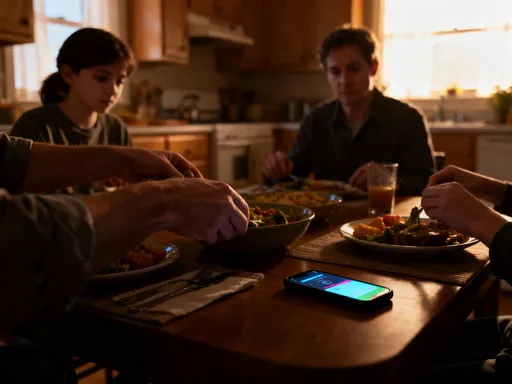
What if Your Dinner Table Could Help You Eat Better—Without the Stress?
Imagine sitting down for family dinner, the chaos of the day winding down, when someone mentions how stressed they’ve felt lately—and suddenly, the conversation shifts from small talk to real connection. Now picture that same moment gently guiding healthier eating habits, not through rules or diets, but through shared moods and mindful choices. That’s what happens when mood tracking apps step into family life, quietly transforming dinner from a meal into a moment of care, awareness, and support. It’s not about perfection. It’s about presence. And what if I told you that a simple tap on a phone could help your family eat better, feel closer, and breathe a little easier—without adding more to your already full plate?
The Chaos of Family Dinners (And Why We Still Fight for Them)
Let’s be honest—getting everyone to the table some nights feels like a minor miracle. You’re rushing from school pickup to soccer practice, then scrambling to thaw something edible while helping with homework and answering work emails. The kids complain about the food before they’ve even tasted it. One wants pasta, another refuses anything green, and someone—usually the toddler—decides tonight is the night to throw their spoon like a javelin. You eat standing up, reheating your plate twice, only to realize it’s cold again by the time you take your third bite.
And yet, we keep showing up. Why? Because deep down, we know it’s about more than nutrition. It’s about connection. It’s the only time in the day when everyone is in the same room, phones (mostly) down, voices (mostly) kind. We’re not just feeding bodies—we’re feeding bonds. There’s safety in the rhythm of it: the same chairs, the same jokes, the same questions: How was your day? But how often does that question go unanswered with a shrug, or a distracted fine, while eyes stay fixed on the plate?
What if that simple question could open a door? What if instead of just asking, we had a way to gently notice—not just what our kids are eating, but how they’re feeling? Because here’s the truth no one talks about: mood shapes appetite more than we realize. A child pushing food around their plate might not be picky—they might be anxious. A teenager eating everything in sight might not be greedy—they might be stressed. And a parent eating cold leftovers over the sink? That’s not just exhaustion. That’s emotional hunger, masked as routine. The dinner table holds clues, if we learn how to read them.
How Moods Shape What’s on the Plate—More Than We Realize
We’ve all been there: a tough day at work, and suddenly the bag of chips is calling your name. Or a quiet evening at home, and you find yourself standing in front of the fridge, not because you’re hungry, but because you’re lonely. Emotions and eating are deeply linked, and science backs this up. When we’re stressed, our bodies release cortisol, which can increase cravings for sugary, fatty foods. When we’re sad, we might lose our appetite altogether—or turn to comfort foods that offer a temporary emotional hug. Even excitement can throw off our hunger cues, making us eat faster or skip meals entirely.
Now imagine this happening in a family of four, five, or more—each person navigating their own emotional weather, bringing it to the table without saying a word. A child who had a hard time at school might withdraw and eat less. A partner dealing with work pressure might overeat without realizing it. And if no one is talking about feelings, those patterns go unnoticed. We blame the menu—They just don’t like broccoli—when the real issue might be They feel overwhelmed and food is the only thing they can control.
Here’s the shift: what if we stopped seeing food choices as just about willpower or taste, and started seeing them as messages? A craving isn’t always weakness. It might be your body saying, I need comfort. A lack of appetite isn’t always stubbornness. It might mean, I’m too anxious to focus on eating. When we ignore mood, we’re missing half the picture. And that’s where a little tech can help—not to judge, not to fix, but to illuminate. Because awareness isn’t about adding pressure. It’s about reducing it.
Enter Mood Tracking Apps: Your Kitchen’s Quiet Ally
Let me guess—when you hear mood tracking app, you might picture something clinical, complicated, or even a little invasive. Like a digital therapist lurking in your pocket. But the truth? The best ones feel nothing like that. They’re simple. Gentle. Designed for real life, not a lab. Think of them as a mood thermometer for your family—something that helps you take the emotional temperature of your household, without drama or demands.
Most work the same way: once a day, you open the app and tap an emoji or type one word—stressed, calm, excited, drained. That’s it. No essays. No quizzes. No pressure to be happy. Over time, those little check-ins start to reveal patterns. You might notice that every Sunday night, the whole family logs anxious. Or that Wednesday dinners are often followed by irritable in the kids’ logs. These aren’t flaws. They’re clues.
And the beauty is, they’re private unless you choose to share. Your teenager can log their mood without you seeing it—unless they want you to. Grandma can use a big-button version on her tablet. Even young kids can point to a face that matches how they feel. The app becomes a quiet companion, not a chore. It doesn’t replace conversation—it makes space for better ones. Instead of guessing why dinner feels tense, you can say, I noticed you picked the sad face today. Want to talk about it? No interrogation. Just care.
Turning Feelings Into Family Food Choices
Here’s where it gets practical. Let’s say your family has been using a mood tracker for a few weeks. You start to see a pattern: every Monday, energy levels are low. Everyone feels sluggish by dinner. Instead of fighting about why no one wants to eat, you try something new—lighter meals. A big salad with grilled chicken, a warm lentil soup, or a veggie stir-fry with quinoa. No heavy carbs, no greasy takeout. And suddenly, the complaints stop. People eat. They feel better. The mood at the table lifts.
Or maybe you notice that midweek stress spikes—especially on Thursdays. The kids are tired, the dog needs the vet, and someone forgot permission slips again. Instead of defaulting to pizza (again), you try something different: a magnesium-rich meal with spinach, avocado, and salmon. You light a candle. Play soft music. Nothing fancy—just a small shift to match the mood. And over time, those small shifts add up. You’re not following a strict plan. You’re responding—like a good host would.
One family I know started logging moods during dinner prep. Mom would ask everyone to tap their feeling while she stirred the pot. At first, the kids thought it was silly. But then, one night, her son tapped overwhelmed. She paused, put the spoon down, and said, That’s a big feeling. Want to tell me about it? He did. It was about a group project at school. They talked. And instead of snapping at each other over dinner, they ended the night with a board game. No food was changed—but everything shifted. That’s the power of awareness. It doesn’t fix everything. But it creates space for better choices—about food, and about each other.
Building Emotional Awareness Alongside Healthy Habits
Here’s something I didn’t expect when I started using a mood tracker with my family: my kids got better at naming their feelings. My eight-year-old used to say I’m mad when she was actually tired. Now, she’ll say, I feel grumpy because I didn’t nap. That’s emotional intelligence in action. And it didn’t come from a lecture. It came from a daily habit—tapping a face, sharing a word, hearing someone say, Yeah, I felt that way today too.
When we model self-awareness, our kids learn it too. They see that it’s okay to not be okay. That hunger isn’t always about food. That stress doesn’t have to turn into silence or yelling. And when we tie that awareness to dinner, we’re doing something powerful: we’re teaching them that taking care of their body includes taking care of their mind.
One simple practice that changed everything for us? The check-in before the meal. Two minutes. That’s all it takes. We go around the table. No pressure to share deeply—just a word or a face. Sometimes it’s tired, happy, fine. Sometimes it’s excited or worried. But those two minutes do something big: they ground us. They say, You’re seen. You’re here. We’re together. And when you start dinner with that kind of connection, the food tastes better. The conversation flows easier. And the chance of emotional eating—on anyone’s part—goes down.
Practical Steps to Start Without Adding More Work
I know what you’re thinking: Another thing to do? Trust me, I felt the same way. But here’s the secret: you don’t have to do it perfectly. You don’t even have to do it every day. Start small. Pick one app—something simple like Daylio, Moodfit, or even the mood feature in Apple Health. Have one person try it first. Maybe you. Tap your mood while the kids are doing homework or while the pasta boils.
Then, invite one other person to join. Make it part of an existing habit. Pour your water? Tap your mood. Light the dinner candle? Tap your mood. It only takes seconds. If someone resists—especially a teen—don’t push. Let them see you doing it. Let them hear you say, I picked ‘stressed’ tonight because work was busy—no big deal. Normalize it. And if screens feel too much, go analog. Get a jar. Write feelings on colored paper—blue for sad, yellow for happy, gray for tired. Each person drops one in before dinner. Read them together, or not. The ritual matters more than the tool.
The goal isn’t perfection. It’s pattern. You don’t need data for 30 days to see a shift. Sometimes, just the act of pausing—of asking, How am I really feeling?—is enough to change the whole evening. And if you miss a day? No guilt. Just start again tomorrow. This isn’t about adding pressure. It’s about releasing it.
When Technology Fades Into the Background—And That’s the Win
Here’s the beautiful thing about using tech this way: the best outcome is when you stop needing it. After a few months of tracking, our family started to notice patterns without opening the app. I’d see my daughter dragging her feet after school and think, She’s not lazy—she’s drained. So instead of pushing her to start homework, I’d offer a warm snack and ten minutes of quiet. My husband began to recognize his stress cravings—late-night chocolate—and started choosing herbal tea instead. The kids started asking each other, Are you hungry, or just bored? without me saying a word.
That’s the real win. Not the data. Not the graphs. But the awareness that sticks. The quiet voice that says, This craving isn’t about food. This irritability isn’t about the dishes. It’s about how I’m feeling. And when that awareness becomes second nature, the app fades into the background—like training wheels on a bike. You don’t need them forever. But they helped you learn how to ride.
So what if your dinner table could help you eat better—without the stress? It already can. You just need to listen. Not just to the words around the table, but to the feelings underneath them. With a little help from a simple tool, you can turn dinner into more than a meal. You can make it a moment of care. Of connection. Of quiet understanding. And in a world that never slows down, that might be the most nourishing thing of all.